- APID
- 8056
- ORCID
- 0000-0002-7439-4423
- Google Scholar
- https://scholar.google.com/citations?view_op=new_articles&hl=en&imq=Mohammad+Mes
- Location
- AJMAN, Ajman, United Arab Emirates
- Expertise
- Pathology (Histopathology & Cytopathology)
- Areas of interest
- Pathology, Hematology, Oncology
- Member since
- September 2024
Biography
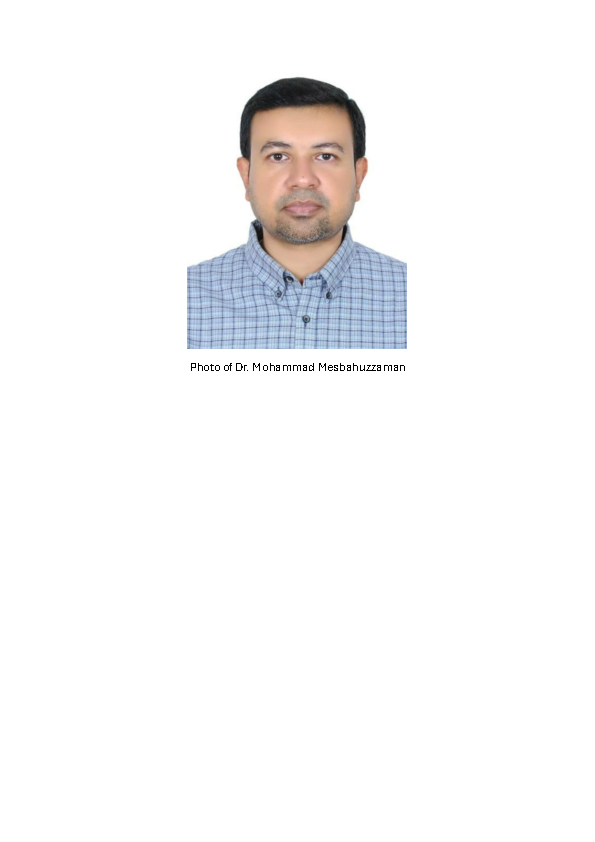
Dr. Mohammad Mesbahuzzaman has graduated from Bangladesh Medical College & Hospital in Sept 1998 with a degree in MBBS. After his internship at the same hospital, he did 1-year residency training program in Paediatric Medicine at Dhaka Shishu (Children) Hospital in 2000. He worked as a Lecturer in the Department of Anatomy at Bangladesh Medical College for 3 years. He completed his MD in Pathology (Histopathology) from Sir Salimullah Medical College in June 2011 at Dhaka University. His MD thesis, "Study of Tumor Markers in the Evaluation of Malignant Pleural Effusion, " was later published by Scholars’ Press. He practiced Clinical Pathology as a Junior Consultant in Lab Aid Diagnostics, Uttara, Dhaka for a few months before joining Gulf Medical University in 2011.
He earned his Graduate Diploma in Health Professions Education (HPS) from Gulf Medical University in 2012 which helped him teach and mentor UG students in pathology. He has attended many national and international conferences, workshops, and training programs in UAE. He has been a member of the International Academy of Cytology (IAC) and the European Society of Pathology (ESP) for the last 2 years.
He aims to teach medical students, prepare them for future challenges in medical education, and help them achieve their future endeavors.
Sign in to see editorial board appointments, follow, and connect.
Sign in